

Malting Process
and Quality Control
Malting process
Malting germinates barley under controlled conditions and then dries it, so that the grain develops the enzymes needed for brewing. Our malt is produced to our specifications by our carefully selected production partners and checked at each stage from barley intake to dispatch.
Barley selection
Tested before it is accepted
Steeping
Water and air wake the grain
Germination
Enzymes develop and the grain modifies
Kilning
Drying fixes colour and flavour
Storage and dispatch
Cleaned, analysed and packed to order
-
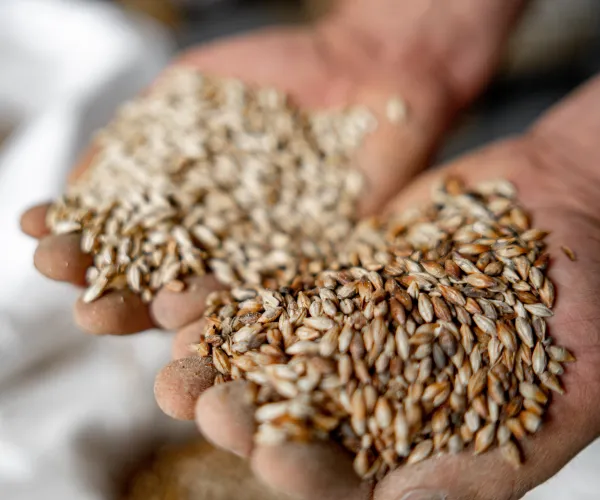
Barley selection
Each lot of barley is sampled on arrival and tested before it is accepted. It must germinate reliably, be dry enough to store safely and fall within the protein range required for the finished malt.
Accepted barley is cleaned and graded by kernel size, so that the grain in each batch steeps and germinates at an even rate.
Checked at intake
- Germinative capacity of at least 95%
- Moisture of no more than 13.5%
- Protein content and kernel size distribution
-
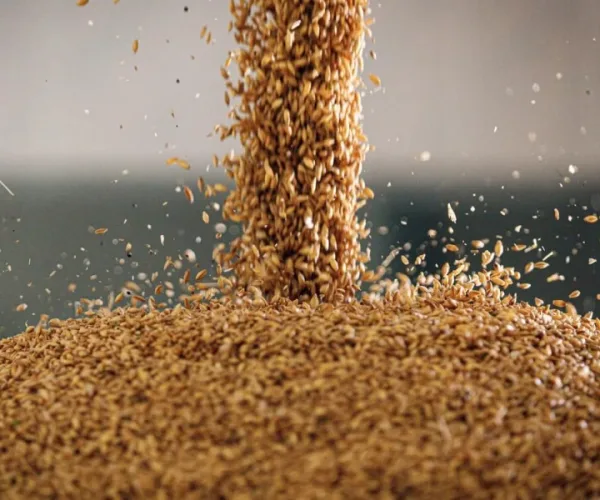
Steeping
The barley is soaked in cold water, in wet periods that alternate with air rests. Over about two days its moisture rises from around 13% to around 45%, enough to wake the embryo and start germination.
The water is changed several times, washing the grain clean, and air is drawn through during the dry periods to supply oxygen and remove carbon dioxide. The length of each wet and dry period is adjusted to the barley lot.
-
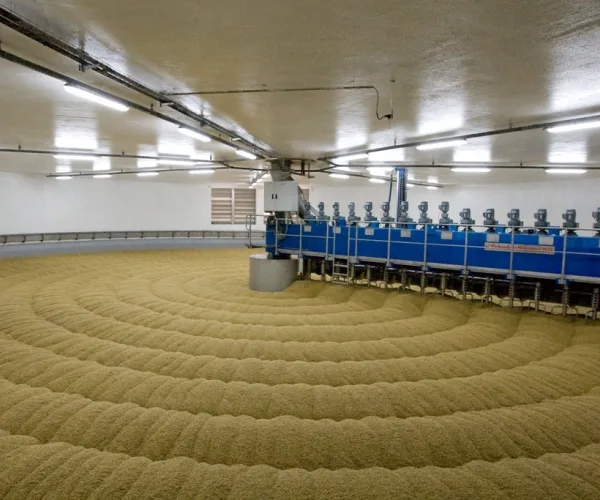
Germination
The steeped grain germinates for five to six days in temperature-controlled vessels, starting at about 18 °C and cooled to 12–14 °C as growth produces heat. Humidified air is blown through the bed and the grain is turned regularly to keep growth even.
During germination, enzymes develop, cell walls break down, starch becomes accessible and proteins are partly converted to amino acids. Temperature, moisture and growth are monitored throughout.
-
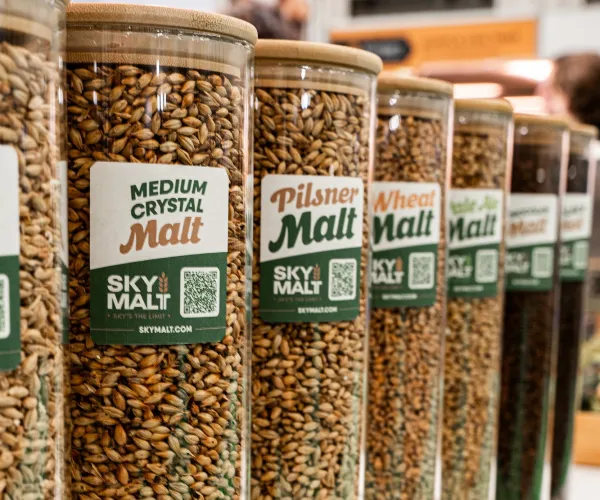
Kilning
Hot air stops germination and dries the green malt over one to two days, to a moisture content low enough for storage. Indirect heating keeps combustion gases away from the grain.
The temperature at the end of kilning sets the malt's colour and flavour. Our Pilsner and Wheat malts finish at 80–85 °C, for a pale colour and high enzyme content; Pale Ale Malt finishes at 85–90 °C, which gives more colour and a biscuit flavour. After kilning, the rootlets are removed and go to animal feed.
On the specification
- Moisture of no more than 4.5%
- Colour from 3.5 EBC for Pilsner Malt to 5.4 EBC for Pale Ale Malt
-
Storage and dispatch
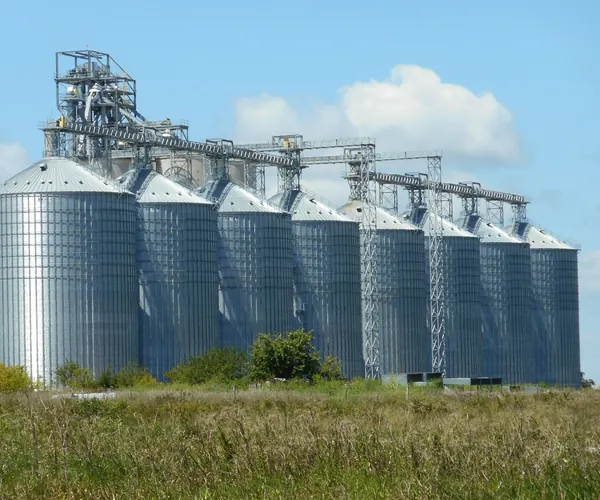
Finished malt rests in silos before it is analysed, then goes through a final cleaning so it arrives ready to mill, with no further cleaning needed at the brewery.
It is then packed to order: in 25 kg or 50 kg bags, in big bags, or loaded loose for bulk delivery.
Formats, routes and shipping documents are covered on our Logistics page.
Quality assurance
Each batch of malt is analysed against its specification, and every delivery comes with a certificate of analysis for its batch. Deliveries can be traced through their production batch to the barley they were made from, and samples of each batch are retained.
Certification and audits
The malting facilities where our malt is produced are ISO certified, and some are certified to GFSI-recognised food safety standards. They are audited by brewing groups such as Carlsberg, Heineken, AB InBev, Molson Coors, CR Snow and Tsingtao.
Food safety
Our malt is tested by independent laboratories, VLB Berlin and SGS, for mycotoxins (aflatoxins, ochratoxin A, deoxynivalenol and zearalenone), heavy metals (lead and cadmium) and pesticide residues.


Declarations
Our malt is made from non-GMO barley and is not treated with ionising radiation. Gibberellic acid (GA3) is generally not used in malting, and never for malt from Ukraine. If it is used for a batch, we declare it.