Seven months into the Iran war, the Strait of Hormuz remains largely closed and a second chokepoint, the Bab al-Mandeb, is now under threat. Almost every stage of malt production depends on energy: fertiliser for the barley crop, diesel for farming and haulage, gas for kilning, and fuel for shipping. How these shocks feed through to malt prices is less obvious than the headline oil price suggests, and for European malt, gas matters as much as oil.
The Strait of Hormuz, the Bab al-Mandeb and oil
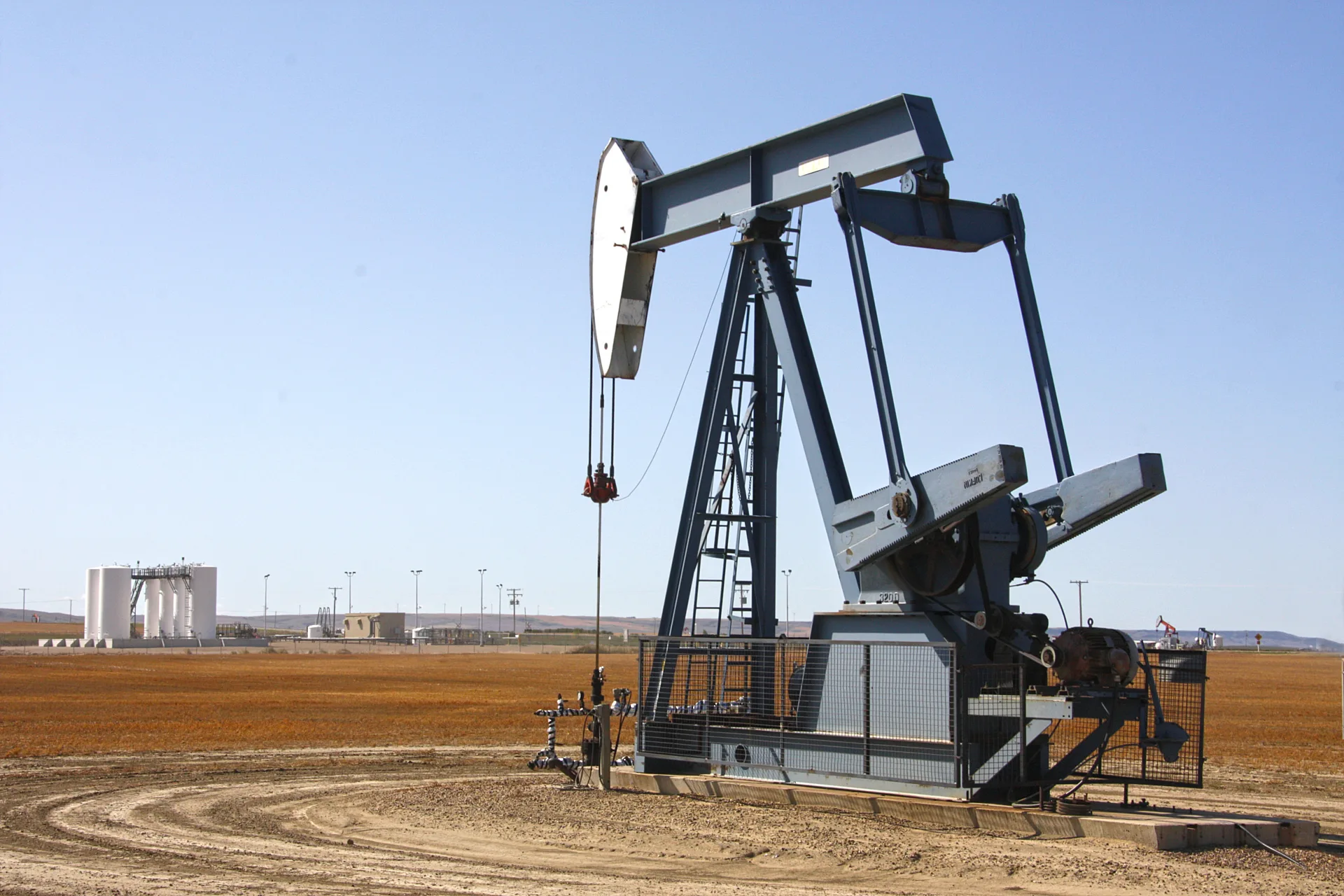
The war began with joint US-Israeli strikes on Iran on 28 February. The Strait of Hormuz normally carries close to a fifth of the world's oil. It is not formally blockaded, but traffic has been very low for months. On 1 September, the Joint Maritime Information Center described commercial traffic as far below its normal level, despite a small recent increase. Few insurers will cover ships on the route, and tankers that do cross are still being attacked.
Some Gulf oil is being rerouted, including through Saudi Arabia's East-West pipeline to the Red Sea, but these alternatives cannot replace the lost volume and are themselves vulnerable. In September, the East-West pipeline was severely damaged in an attack.
The risk has now spread to the Red Sea. By mid-September, the Houthis controlled Yemen's entire Red Sea coastline, Perim Island and the Hanish Islands, giving them strategic control over the Bab al-Mandeb. Together, Hormuz and the Bab al-Mandeb carry more than a quarter of the world's seaborne oil trade.
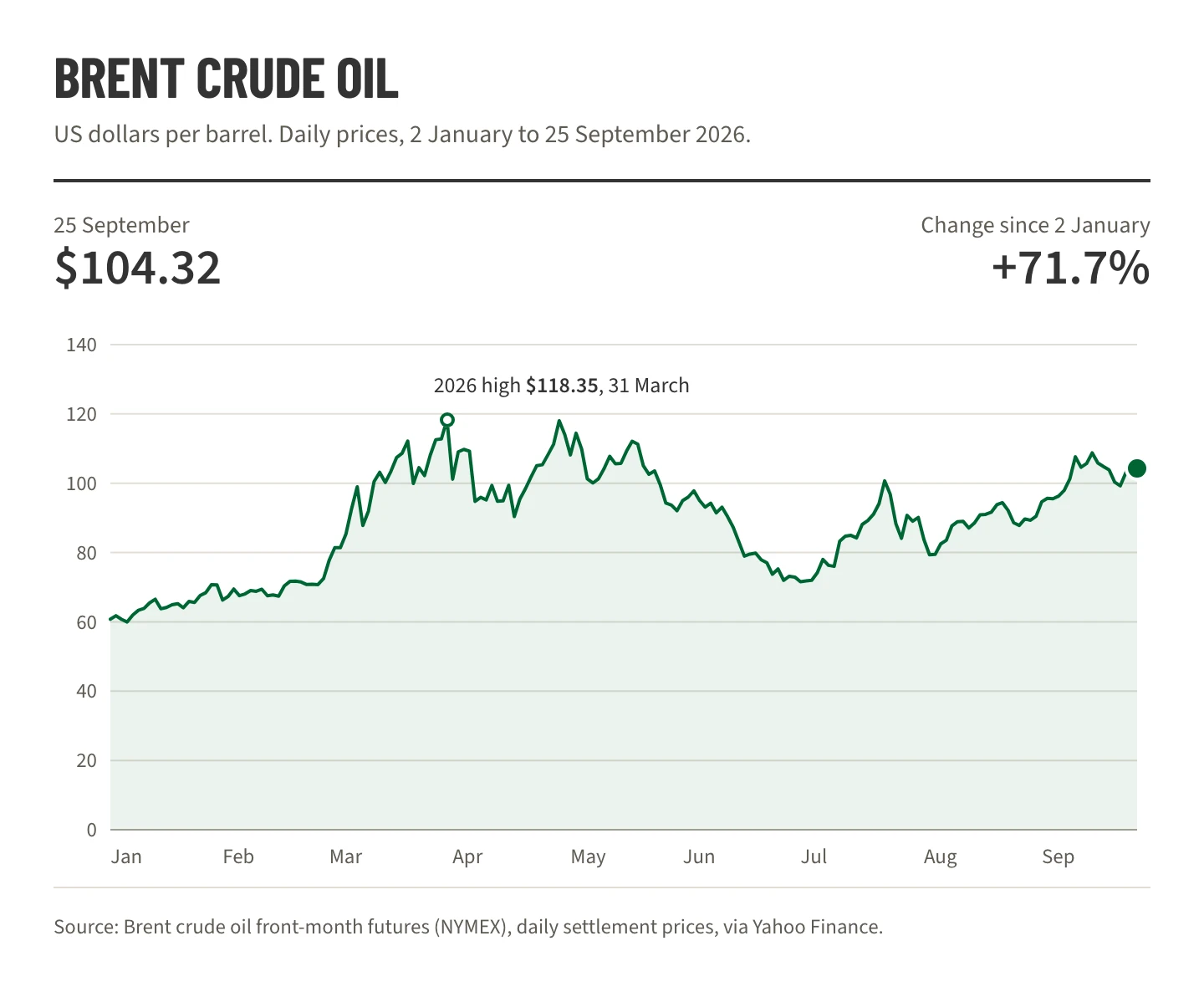
After an initial spike, Brent crude fell back sharply once a ceasefire was announced in April. It has since been driven by repeated rounds of talks and renewed fighting. It surged to $109 in early September as attacks on shipping and energy infrastructure resumed. On 28 September Brent stood at $106.89, up 18% over the month and 59% on a year earlier.
In our view, markets have so far been too optimistic. Prices have assumed a relatively quick resolution and have been cushioned by oil inventories and weaker Chinese import demand. Those buffers are thinning. Bank of America has warned that strategic and commercial inventories are becoming steadily smaller. The political differences between the two sides remain fundamental, and neither shows much willingness to compromise. White House advisers have reportedly discussed the possibility that the war could continue beyond January 2029. We expect heavily restricted traffic through Hormuz to continue at least until the end of the year.
Natural gas and fertiliser
For Europe, the gas situation is more serious than oil. At the start of the war, QatarEnergy halted all gas production after Iranian drone attacks on its facilities. QatarEnergy accounts for nearly 20% of global LNG exports. Some Qatari LNG carriers have begun crossing Hormuz again in recent weeks, after traffic almost stopped in August, but volumes remain far below normal.
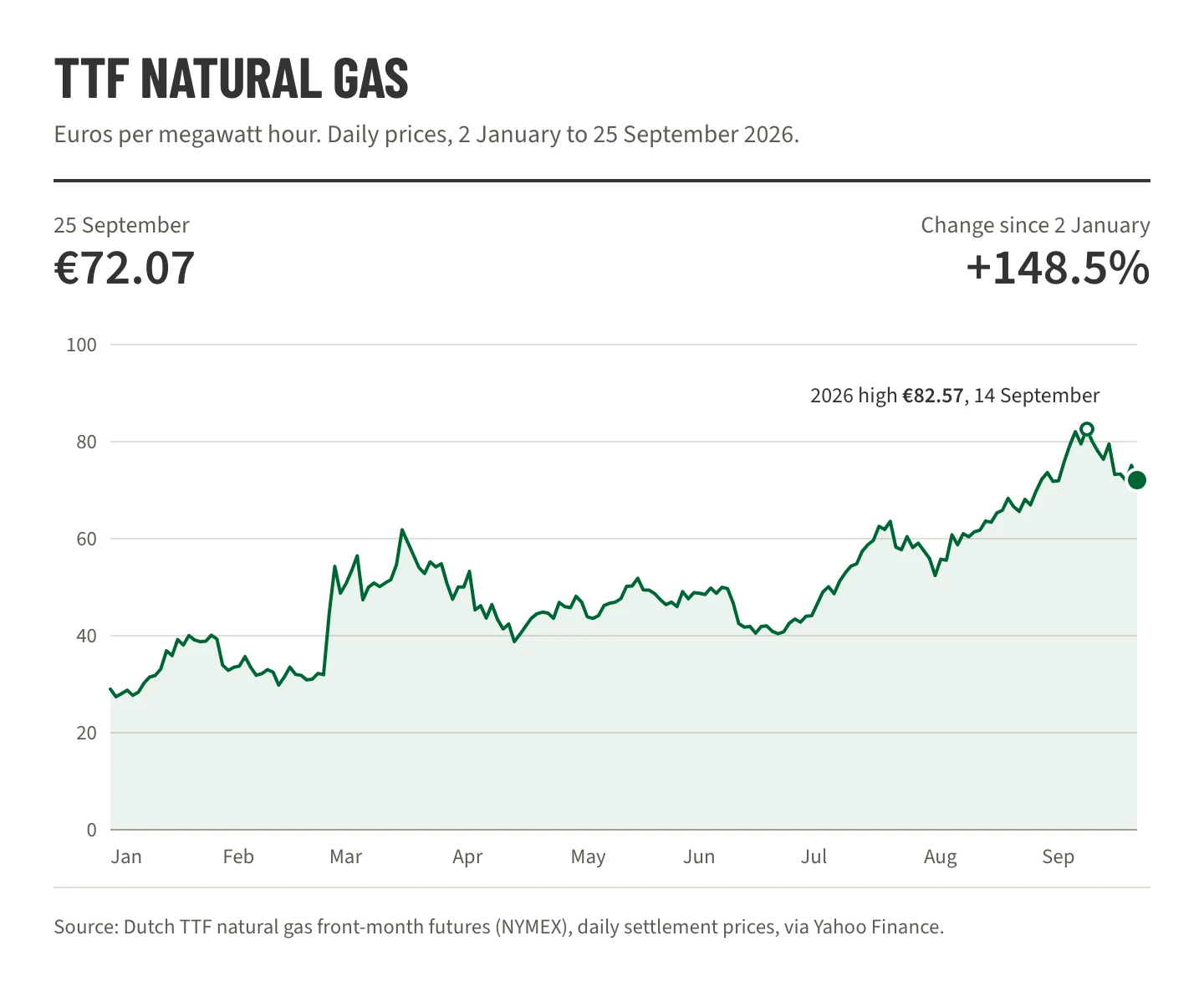
Europe is also phasing out Russian gas, so it must compete with Asian buyers for the same cargoes of US and other LNG. The Dutch TTF benchmark reached €74.02/MWh on 28 September, more than double its level a year ago.
Gas affects malt in two ways. The first is direct: malting plants use gas for kilning, which is one of the largest costs of malt production. The second is through fertiliser. Natural gas accounts for roughly 70–80% of the production cost of urea and ammonia. The Gulf states also supply around 35% of the world's urea, so the war has disrupted fertiliser supply itself as well as its cost. Nitrogen fertiliser cost EU farmers about 71% more in April 2026 than the 2024 average.
Fertiliser costs will matter most for the 2027 barley crop. Winter barley is being sown now and spring barley will be planted early next year. Farmers facing high nitrogen prices may reduce their applications, which carries risks for both yield and protein content.
Diesel and bunker fuel
Crude oil itself is not used on farms or in transport. What matters is refined products, especially diesel and marine bunker fuel.
Diesel is used throughout agriculture, logistics and industry, and it is one of the input costs behind grain prices. Higher diesel prices push up the cost of growing barley and of hauling it from farm to maltings, and in turn the cost of delivering malt by road and rail. In the US, on-highway diesel reached $6.285 per gallon on 14 September, a rise of almost 32 cents in a week. The US Energy Information Administration attributes the rise to high crude prices and tight global supplies of distillates.
Bunker fuel is the main cost for container ships, which carry much of the world's malt imports. Bunker prices rose 74% in three months earlier this year and remain at historically high levels. Shipping lines are passing on the cost. CMA CGM, for example, will apply an emergency fuel surcharge of $265 per TEU on head-haul dry cargo from 1 October. Inland hauliers are applying similar diesel surcharges.
China is particularly exposed. Because it exports far more than it imports, container demand from China to other countries is strong and freight from China is already relatively expensive. Fuel surcharges add to that.
Outlook
- Grain prices are under upward pressure worldwide, driven by higher fertiliser, diesel and transport costs.
- European malt faces a structural price increase for the 2026/27 season. With gas and fertiliser costs feeding into the 2027 crop, this is likely to continue in 2027/28.
- Australia is less exposed to the direct gas shock, as its maltsters rely on domestic gas. It still imports much of its fertiliser and refined fuel, however, so it is not insulated.
- China is likely to be the most affected exporter, as higher bunker costs and fuel surcharges come on top of already expensive outbound freight. However, the Chinese malting industry is large, highly competitive and quick to adapt, and we expect it to absorb much of the pressure and remain a significant supplier.
- Freight is more expensive for every origin and destination. Malt imports into Asia, Africa and Latin America will reflect higher sea freight and surcharges.